

Unknown's avatar

About Michel de Rooij

Michel de Rooij, with over 25 years of mixed consulting and automation experience with Exchange and related technologies, is a consultant for Rapid Circle. He assists organizations in their journey to and using Microsoft 365, primarily focusing on Exchange and associated technologies and automating processes using PowerShell or Graph. Michel's authorship of several Exchange books and role in the Office 365 for IT Pros author team are a testament to his knowledge. Besides writing for Practical365.com, he maintains a blog on eightwone.com with supporting scripts on GitHub. Michel has been a Microsoft MVP since 2013.

Exchange Updates (and more) – H1 2022


20220423: Added TLS 1.3 note.

The Exchange Team released the quarterly half-yearly Cumulative Updates for Exchange Server 2019 and Exchange 2016. You read that right, half-yearly updates are replacing the cadence of quarterly update servicing model for Exchange Server. Effectively, this will be Exchange 2019 only, as Exchange 2016 will be out of mainstream support in H2 of 2022, and will therefor only receive Security Updates after this round. Note that this change also alters the effective ‘current’ state (n-1 or later) of your Exchange Server environment from half year to one year.

And that’s not the only good news that comes with these sets of updates. In short:

  • If you run Exchange 2019 in Hybrid only for the purpose of managing recipients, you can now use Exchange 2019 CU12’s Exchange Management Tools to accomplish this; no more need to have an Exchange server running just for this. More details here.
  • Exchange 2019 CU12 will reintroduce the Hybrid Key option. Its Hybrid Configuration Wizard supports this licensing method.
  • Exchange 2019 CU12 support managing the Hybrid Agent with MFA-enabled accounts.
  • Exchange 2019 CU12 adds support for Windows Server 2022, both for its underlying operating system, as well as deployment in environments running Windows Server 2022 Domain Controllers.
  • Note that while Windows Server 2022 supports TLS 1.3, Exchange 2019 CU12 on WS2022 does not yet support it. Adding support is scheduled for somewhere next year.
  • The supportability matrix has been updated for the supported Windows Server 2022 scenarios.
  • Exchange Server is now also part of Microsoft’s Bounty Program, which is an indication of continued focus for customers still running Exchange Servers on-premises.

Links to the updates as well as a description of changes and fixes are described below. The column Schema and AD indicate if the CU contains Schema (/PrepareSchema) and Active Directory (PrepareAD) changes compared to the previous CU. Refer to the Exchange Schema page for schema and related versioning information.

VersionBuildKBDownloadUMLPSchemaAD
Exchange 2019 CU1215.2.1118.7KB5011156Download NY
Exchange 2016 CU2315.1.2507.6KB5011155DownloadUMLPNY

Apart from DST changes and the fixes mentioned below, these Cumulative Updates also contain a change which will not allow using UNC paths with several cmdlets. More information about this change and cmdlets affected can be found here: KB5014278.

Exchange 2019 CU12 fixes:

  • 5012757 “Migration user… can’t be found” error when using Start-MigrationUser after batch migration fails
  • 5012758 Start-MailboxAssistant is not available in Exchange Server 2019
  • 5012760 You can’t access OWA or ECP after installing the July 2021 security update
  • 5012761 External attendees see “Send the Response Now” although no response was requested in Exchange Server
  • 5012762 PST creation is unexpectedly triggered again during multiple mailbox export
  • 5012765 Email stuck in queue starting from “2022/1/1 00:01:00 UTC+0” on all Exchange on-premises servers
  • 5012766 Transport Services fail repeatedly because of * Accepted Domain
  • 5012768 Start-MigrationUser and Stop-MigrationUser are unavailable for on-premises Exchange Server 2019 and 2016
  • 5012769 Invalid New Auth Certificate for servers that are not on UTC time zone
  • 5012770 No response from public folder for users migrating to Microsoft Exchange 2019
  • 5012772 Items are skipped at the start of a new search page request
  • 5012773 OWAMailboxPolicy is bypassed and high resolution profile images can be uploaded
  • 5012774 Can’t change default path for Trace log data in Exchange Server 2019 and 2016
  • 5012775 No additional global catalog column in the address book service logs
  • 5012776 Exchange Server 2019 help link in OWA redirects users to online help for Exchange Server 2016
  • 5012777 Can’t find forwarded messages that contain attachments in Exchange Server 2019
  • 5012778 Exchange Server stops responding when processing PDF files with set transport rule
  • 5012779 Invalid new auth certificate for servers that are not on UTC time zone
  • 5012780 Disable-Mailbox does not remove LegacyExchangeDN attribute from on-premises Exchange 2019
  • 5012781 Exchange Server 2019 and 2016 DLP doesn’t detect Chinese resident ID card numbers
  • 5012782 MS ExchangeDiagnostic Service causes errors during service startup and initialization in Microsoft Exchange 2019
  • 5012783 Can’t restore data of a mailbox when LegacyDN is empty in the database
  • 5012784 Exchange 2016 CU21 and Exchange 2019 CU10 cannot save “Custom Attributes” changes in EAC
  • 5012785 Read Only Domain Controllers (RODCs) in other domains do not get desired permissions
  • 5012786 Forwarded meeting appointments are blocked or considered spam
  • 5012787 Download domains created per CVE-2021-1730 don’t support ADFS authentication in OWA
  • 5012789 Can’t use Copy Search Results after eDiscovery & Hold search
  • 5012790 OWA doesn’t remove the “loading” image when a message is opened in Chrome and Edge browsers
  • 5012791 MailboxAuditLog doesn’t work in localized (non-English) environments

Exchange 2016 CU23 fixes:

  • 5012757 “Migration user… can’t be found” error when using Start-MigrationUser after batch migration fails
  • 5012760 You can’t access OWA or ECP after installing the July 2021 security update
  • 5012761 External attendees see “Send the Response Now” although no response was requested in Exchange Server
  • 5012765 Email stuck in queue starting from “2022/1/1 00:01:00 UTC+0” on all Exchange on-premises servers
  • 5012768 Start-MigrationUser and Stop-MigrationUser are unavailable for on-premises Exchange Server 2019 and 2016
  • 5012769 Invalid New Auth Certificate for servers that are not on UTC time zone
  • 5012774 Can’t change default path for Trace log data in Exchange Server 2019 and 2016
  • 5012779 Invalid new auth certificate for servers that are not on UTC time zone
  • 5012780 Disable-Mailbox does not remove LegacyExchangeDN attribute from on-premises Exchange 2019
  • 5012781 Exchange Server 2019 and 2016 DLP doesn’t detect Chinese resident ID card numbers
  • 5012782 MS ExchangeDiagnostic Service causes errors during service startup and initialization in Microsoft Exchange 2019
  • 5012783 Can’t restore data of a mailbox when LegacyDN is empty in the database
  • 5012784 Exchange 2016 CU21 and Exchange 2019 CU10 cannot save “Custom Attributes” changes in EAC
  • 5012786 Forwarded meeting appointments are blocked or considered spam
  • 5012787 Download domains created per CVE-2021-1730 don’t support ADFS authentication in OWA
  • 5012789 Can’t use Copy Search Results after eDiscovery & Hold search
  • 5012791 MailboxAuditLog doesn’t work in localized (non-English) environments
  • 5012829 Group metrics generation fails in multidomain environment

Notes:

  • If these Cumulative Updates contain schema changes compared to the Cumulative Update you currently have deployed, you need to run Setup with /PrepareSchema. If they contain Active Directory changes, you need to run /PrepareAD. Alternatively, permissions permitting, you can let Setup perform this step. Consult the Exchange schema versions page for schema and related versioning information.
  • When upgrading from an n-2 or earlier version of Exchange, or an early version of the .NET Framework, consult Upgrade Paths for CU’s & .NET.
  • Don’t forget to put the Exchange server in maintenance mode prior to updating. Regardless, setup will put the server in server-wide offline mode post-analysis, before making actual changes.
  • When using Exchange hybrid deployments or Exchange Online Archiving (EOA), support requires you to trail at most one version (n-1).
  • If you want to speed up the update process for systems without internet access, you can follow the procedure described here to disable publisher’s certificate revocation checking.
  • Cumulative Updates can be installed directly; no need to install RTM prior to installing Cumulative Updates.
  • Once upgraded, you can’t uninstall a Cumulative Update nor any of the installed Exchange server roles.
  • The recommended upgrade order is internet-facing, non-internet-facing servers first, followed by Edge Transports.

Caution:

As for any update, I recommend to thoroughly test updates in a test environment prior to implementing them in production. When you lack such facilities, hold out a few days and monitor the comments on the original publication or forums for any issues.
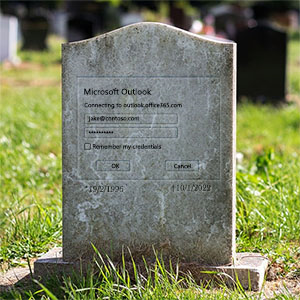
Basic Authentication: End of an Era


1sep2022: Added announcement regarding Jan2023 extension

Back in September 2019, Microsoft announced it would start to turn off Basic Authentication for non-SMTP protocols in Exchange Online on tenants where the authentication protocol was detected as inactive. This is part of an overall movement to deprecate the less secure Basic Authentication, which is unfit to face the security challenges of the modern world, being subject to things like password spray attacks. It’s modern successor, modern authentication or OAuth2, uses a token and claim based mechanism contrary to sending accounts and passwords, and is the preferred authentication method. When combined with Azure AD for authentication, Modern Authentication also supports features such as Multi-Factor Authentication or Conditional Access.

The original date for disabling of Basic Authentication was October 13th, 2020. Then the world had other matters to deal with, and Microsoft extended the timelines. After initially postponing turning Basic Authentication off to second half of 2021, the ‘start date’ for permanently turning the lights off for Basic Authentication was set to October 1st, 2022, as per this article on Docs and MC286990 in the Message Center. Mind the ‘start’ in start date, as flicking the switch for millions of tenants takes time before it becomes effective on your tenant. Organizations do need to anticipate on this change for the first of October.

On September 1st, Microsoft published an update to these timelines as there were still some cases were organizations could not make the deadline of October 1st. To meet these customers “one last time”, organizations can now use the self-service diagnostics to extend disabling of Basic Authentication to January 2023. This needs to be done per protocol, also if organizations requested opt-out or re-enabled Basic Authentication earlier. Details as well as instructions and revised timelines on Basic Authentication switching off are laid out in a new article.

Until then, organizations can (re-)enable Basic Authentication for the protocols they need, using the self-help system in the Microsoft 365 admin center. After entering “Diag: Enable Basic Auth in EXO” in the problem search query, the request will be checked, and Basic Authentication will get enabled. But with the end of support for Basic Authentication, so will this temporary workaround. On a side note, per end of 2020, newly created tenants already have basic authentication disabled by means of security defaults – if those organizations require Basic Authentication for some reason, they will also need to reconfigure security defaults which by default is an all or nothing option for all protocols.

So, with the doomsday counter ticking away for Basic Authentication, what are the consequences for Exchange related workloads organizations might wonder. In this article, I will address some of these concerns.

Update: Microsoft meanwhile has disclosed much awaited details on changes in the native Mail app on iOS. This update is effective per iOS 15.6, and adds support for migrating configured accounts from using Basic Authentication to using Modern Authentication (OAuth). For this work work seamlessly and without user interruption, some configuration is needed on the back-end. Details can be found in a separate article here on this specific topic.

Click here to read the full article on ENow Solutions blog. Note that the ENow article does not include later updates, such as the latest timeline revisions and iOS account conversion, both mentioned above.

The Missing Cmdlets Mystery


A short blog on something which I find still surprises admins and consultants working with Exchange Online Management module for Powershell. The Exchange Online Management v2 module has been offering support for REST for a while now. One of the benefits of using these REST-based cmdlets, apart from performance and resilience, is that it uses Modern Authentication to connect to Exchange Online, which is the way forward, as Basic Authentication gets directed to the exit.

Now the initial versions of the module supported a limited set of 9 cmdlets. The REST cmdlets used the EXO prefix, such as Get-EXOMailbox as counterpart of Get-Mailbox. I wrote an earlier blog about using EXOv2, configuring the app in Azure and alternative ways to authenticate here.

Per version 2.0.6, which is still in preview, around 250 additional cmdlets got REST support as well, but using their original name and parameter set. You can check the number of cmdlets available after connecting, e.g.

Install-Module ExchangeOnlineManagement
Connect-ExchangeOnline -UserPrincipalName <UPN>
((Get-Module).Where{ $_.ExportedCommands.'Get-Mailbox'} | Select-Object -ExpandProperty ExportedCommands).GetEnumerator() | Measure-Object

As you can see above, after connecting this version supports 397 cmdlets for my role in addition to the 31 available pre-connecting. Your exact number might vary, based on the roles assigned to your account.

The confusion usually starts when people enter commands or run scripts, and find cmdlets are “missing”. Often they find that the Set/New cmdlet is unavailable, while the Get is available, e.g.

Before, this could be an indication those commands were removed from the role assigned to you, such as the New-MailboxImportRequest cmdlet which only is available if you have mailbox import/export assigned. But in this situation, it could be that the cmdlet does not have a REST call (yet). In those cases, you need to connect using a regular Remote PowerShell session, by specifying -UseRPSSession:

Connect-ExchangeOnline -UserPrincipalName <UPN> -UseRPSSession

When connecting this way, I have 739 cmdlets at my disposal, including the ones which do not support REST. Note that cmdlets which support REST still will use REST; the commands that require Remote PowerShell will use the imported cmdlet. As a reminder, Remote Powershell requires Basic Authentication, and therefor must be enabled on the system you are connecting from.

Tip: Did you know you can view the release notes of the installed Exchange Online Management module by inspecting the ReleaseNotes property, e.g.

(Get-Module ExchangeOnlineManagement).ReleaseNotes

Security Updates Exchange 2013-2019 (Mar2022)


The Exchange PG released March updates for Exchange Server 2013, 2016 and 2019. More detailed information on patching and how to get current when running an earlier CU of Exchange, can be found at the original blog post here.

The vulnerabilities addressed in these security updates are:

VulnerabilityCategorySeverityRating
CVE-2022-23277Remote Code ExecutionCriticalCVSS:3.1 8.8 / 7.7
CVE-2022-24463SpoofingImportantCVSS:3.1 6.5 / 5.7

These vulnerabilities are addressed in the following security updates below. The exception is KB5010324 which does not fix CVE-2022-24463 for Exchange 2013. If this is because of the severity classification or the problem being non-existent for Exchange 2013, has not been not disclosed.

ExchangeDownloadBuildKBSupersedes
Exchange 2019 CU11Download15.2.986.22KB5012698KB5008631
Exchange 2019 CU10Download15.2.922.27KB5012698KB5008631
Exchange 2016 CU22Download15.1.2375.24KB5012698KB5008631
Exchange 2016 CU21Download15.1.2308.27KB5012698KB5008631
Exchange 2013 CU23Download15.0.1497.33KB5010324KB5008631

Finally, KB5010324 also contains the following additional fix for Exchange 2013:

  • 5012925 RFC certificate timestamp validation in Exchange Server 2013

Be advised that these security updates are Cumulative Update level specific. You cannot apply the update for Exchange 2019 CU11 to Exchange 2019 CU10. Also, the security update download has the same name for different Cumulative Updates, and I would suggest tagging the file name with the CU level, e.g. Exchange2019-CU10-KBXXXXXX-x64-en.msp.

As a reminder, run the Security Update from an elevated command prompt to prevent issues during installation. In other words: Do not just double-click on the .MSP file. And on a final note, as with any patch or update, I’d recommend to apply this in a test environment first, prior to implementing it in production. However, it is not recommended to wait for regular maintenance cycles when it concerns security updates, and follow a more agile approach; the ratings are an indication of the urgency.

Security Updates Exchange 2013-2019 (Jan2022)


Another year, another Patch Tuesday! A quick blog on January 2022’s security updates for Exchange Server 2013 up to 2019.

The vulnerabilities addressed in these security updates are:

VulnerabilityCategorySeverityRating
CVE-2022-21969Remote Code ExecutionImportantCVSS:3.1 9.0 / 7.8
CVE-2022-21855Remote Code ExecutionImportantCVSS:3.1 9.0 / 7.8
CVE-2022-21846Remote Code ExecutionCriticalCVSS:3.0 9.0 / 7.8

Vulnerabilities mentioned in the table above are addressed in the following security updates.

ExchangeDownloadBuildKBSupersedes
Exchange 2019 CU11Download15.2.986.15KB5008631KB5007409
Exchange 2019 CU10Download15.2.922.20KB5008631KB5007409
Exchange 2016 CU22Download15.1.2375.18KB5008631KB5007409
Exchange 2016 CU21Download15.1.2308.21KB5008631KB5007409
Exchange 2013 CU23Download15.0.1497.28KB5008631KB5007409

More detailed information can be found at the original blog post here. The security update also fixes the OWA redirection problem for Exchange hybrid deployments introduced with the November security updates.

Be advised that these security updates are Cumulative Update level specific. You cannot apply the update for Exchange 2019 CU11 to Exchange 2019 CU10. Also, the security update download has the same name for different Cumulative Updates, and I would suggest tagging the file name with the CU level, e.g. Exchange2019-CU10-KBXXXXXX-x64-en.msp.

As a reminder, run the Security Update from an elevated command prompt to prevent issues during installation. In other words: Do not just double-click on the .MSP file. And on a final note, as with any patch or update, I’d recommend to apply this in a test environment first, prior to implementing it in production. However, it is not recommended to wait for regular maintenance cycles when it concerns security updates, and follow a more agile approach; the ratings are an indication of the urgency.