Unknown's avatar

About Michel de Rooij

Michel de Rooij, with over 25 years of mixed consulting and automation experience with Exchange and related technologies, is a consultant for Rapid Circle. He assists organizations in their journey to and using Microsoft 365, primarily focusing on Exchange and associated technologies and automating processes using PowerShell or Graph. Michel's authorship of several Exchange books and role in the Office 365 for IT Pros author team are a testament to his knowledge. Besides writing for Practical365.com, he maintains a blog on eightwone.com with supporting scripts on GitHub. Michel has been a Microsoft MVP since 2013.

The Missing Cmdlets Mystery


A short blog on something which I find still surprises admins and consultants working with Exchange Online Management module for Powershell. The Exchange Online Management v2 module has been offering support for REST for a while now. One of the benefits of using these REST-based cmdlets, apart from performance and resilience, is that it uses Modern Authentication to connect to Exchange Online, which is the way forward, as Basic Authentication gets directed to the exit.

Now the initial versions of the module supported a limited set of 9 cmdlets. The REST cmdlets used the EXO prefix, such as Get-EXOMailbox as counterpart of Get-Mailbox. I wrote an earlier blog about using EXOv2, configuring the app in Azure and alternative ways to authenticate here.

Per version 2.0.6, which is still in preview, around 250 additional cmdlets got REST support as well, but using their original name and parameter set. You can check the number of cmdlets available after connecting, e.g.

Install-Module ExchangeOnlineManagement
Connect-ExchangeOnline -UserPrincipalName <UPN>
((Get-Module).Where{ $_.ExportedCommands.'Get-Mailbox'} | Select-Object -ExpandProperty ExportedCommands).GetEnumerator() | Measure-Object

As you can see above, after connecting this version supports 397 cmdlets for my role in addition to the 31 available pre-connecting. Your exact number might vary, based on the roles assigned to your account.

The confusion usually starts when people enter commands or run scripts, and find cmdlets are “missing”. Often they find that the Set/New cmdlet is unavailable, while the Get is available, e.g.

Before, this could be an indication those commands were removed from the role assigned to you, such as the New-MailboxImportRequest cmdlet which only is available if you have mailbox import/export assigned. But in this situation, it could be that the cmdlet does not have a REST call (yet). In those cases, you need to connect using a regular Remote PowerShell session, by specifying -UseRPSSession:

Connect-ExchangeOnline -UserPrincipalName <UPN> -UseRPSSession

When connecting this way, I have 739 cmdlets at my disposal, including the ones which do not support REST. Note that cmdlets which support REST still will use REST; the commands that require Remote PowerShell will use the imported cmdlet. As a reminder, Remote Powershell requires Basic Authentication, and therefor must be enabled on the system you are connecting from.

Tip: Did you know you can view the release notes of the installed Exchange Online Management module by inspecting the ReleaseNotes property, e.g.

(Get-Module ExchangeOnlineManagement).ReleaseNotes

Security Updates Exchange 2013-2019 (Mar2022)


The Exchange PG released March updates for Exchange Server 2013, 2016 and 2019. More detailed information on patching and how to get current when running an earlier CU of Exchange, can be found at the original blog post here.

The vulnerabilities addressed in these security updates are:

VulnerabilityCategorySeverityRating
CVE-2022-23277Remote Code ExecutionCriticalCVSS:3.1 8.8 / 7.7
CVE-2022-24463SpoofingImportantCVSS:3.1 6.5 / 5.7

These vulnerabilities are addressed in the following security updates below. The exception is KB5010324 which does not fix CVE-2022-24463 for Exchange 2013. If this is because of the severity classification or the problem being non-existent for Exchange 2013, has not been not disclosed.

ExchangeDownloadBuildKBSupersedes
Exchange 2019 CU11Download15.2.986.22KB5012698KB5008631
Exchange 2019 CU10Download15.2.922.27KB5012698KB5008631
Exchange 2016 CU22Download15.1.2375.24KB5012698KB5008631
Exchange 2016 CU21Download15.1.2308.27KB5012698KB5008631
Exchange 2013 CU23Download15.0.1497.33KB5010324KB5008631

Finally, KB5010324 also contains the following additional fix for Exchange 2013:

  • 5012925 RFC certificate timestamp validation in Exchange Server 2013

Be advised that these security updates are Cumulative Update level specific. You cannot apply the update for Exchange 2019 CU11 to Exchange 2019 CU10. Also, the security update download has the same name for different Cumulative Updates, and I would suggest tagging the file name with the CU level, e.g. Exchange2019-CU10-KBXXXXXX-x64-en.msp.

As a reminder, run the Security Update from an elevated command prompt to prevent issues during installation. In other words: Do not just double-click on the .MSP file. And on a final note, as with any patch or update, I’d recommend to apply this in a test environment first, prior to implementing it in production. However, it is not recommended to wait for regular maintenance cycles when it concerns security updates, and follow a more agile approach; the ratings are an indication of the urgency.

Security Updates Exchange 2013-2019 (Jan2022)


Another year, another Patch Tuesday! A quick blog on January 2022’s security updates for Exchange Server 2013 up to 2019.

The vulnerabilities addressed in these security updates are:

VulnerabilityCategorySeverityRating
CVE-2022-21969Remote Code ExecutionImportantCVSS:3.1 9.0 / 7.8
CVE-2022-21855Remote Code ExecutionImportantCVSS:3.1 9.0 / 7.8
CVE-2022-21846Remote Code ExecutionCriticalCVSS:3.0 9.0 / 7.8

Vulnerabilities mentioned in the table above are addressed in the following security updates.

ExchangeDownloadBuildKBSupersedes
Exchange 2019 CU11Download15.2.986.15KB5008631KB5007409
Exchange 2019 CU10Download15.2.922.20KB5008631KB5007409
Exchange 2016 CU22Download15.1.2375.18KB5008631KB5007409
Exchange 2016 CU21Download15.1.2308.21KB5008631KB5007409
Exchange 2013 CU23Download15.0.1497.28KB5008631KB5007409

More detailed information can be found at the original blog post here. The security update also fixes the OWA redirection problem for Exchange hybrid deployments introduced with the November security updates.

Be advised that these security updates are Cumulative Update level specific. You cannot apply the update for Exchange 2019 CU11 to Exchange 2019 CU10. Also, the security update download has the same name for different Cumulative Updates, and I would suggest tagging the file name with the CU level, e.g. Exchange2019-CU10-KBXXXXXX-x64-en.msp.

As a reminder, run the Security Update from an elevated command prompt to prevent issues during installation. In other words: Do not just double-click on the .MSP file. And on a final note, as with any patch or update, I’d recommend to apply this in a test environment first, prior to implementing it in production. However, it is not recommended to wait for regular maintenance cycles when it concerns security updates, and follow a more agile approach; the ratings are an indication of the urgency.

Annual Report 2021


stats chart

Happy new year to all my dear readers and followers. While some thought after 2020 things would improve soon, 2021 proved to be another year of dealing with measures. That said, 2021 was not very different compared to 2020 from a work perspective, with many organizations now professionalizing their quickly adopted digital transformation, further normalization for work from home scenarios. The year again proved to be a challenge for those busy working on customer projects while catering to the community as well. In the end, it is all about finding a balance, especially if you are working from home and the rest of the household is as well.

Now, without further ado, here are some of this blog’s and GitHub’s top entries for 2021.

General Stats

  • Number of views: 271,751 (3,086,610 all-time)
  • Unique visitors: 168,011 (1,627,860 all-time)
  • Number of posts: 17 (647 total)
  • Followers: 508
  • Busiest day: March 4, 2021 (5,616)
  • Popular time of day: Wednesday, 3pm

Popular blogs

Not surprisingly, posts related to the Hafnium security updates lead the way in 2021:

POPULAR Blogs from 2021
Security Update Exchange 2010-2019 (Mar2021)
Security Updates Exchange 2013-2019 (Jul2021)
Security Recommendation Exchange 2016-2019
Security Updates Exchange 2013-2019 (Nov2021)
Security Updates Exchange 2013-2019 (Oct2021)

While I published some additional scripts on my GitHub repository, some scripts like the script to download Ignite sessions or remove duplicate items from Exchange mailboxes remain popular. I performed a total of 144 updates on the scripts, and have 102 people following my GitHub profile.

Script
Connect-Office365Services
Get-EventSession
Remove-DuplicateItems
Remove-MessageClassItems
Invoke-Unarchive

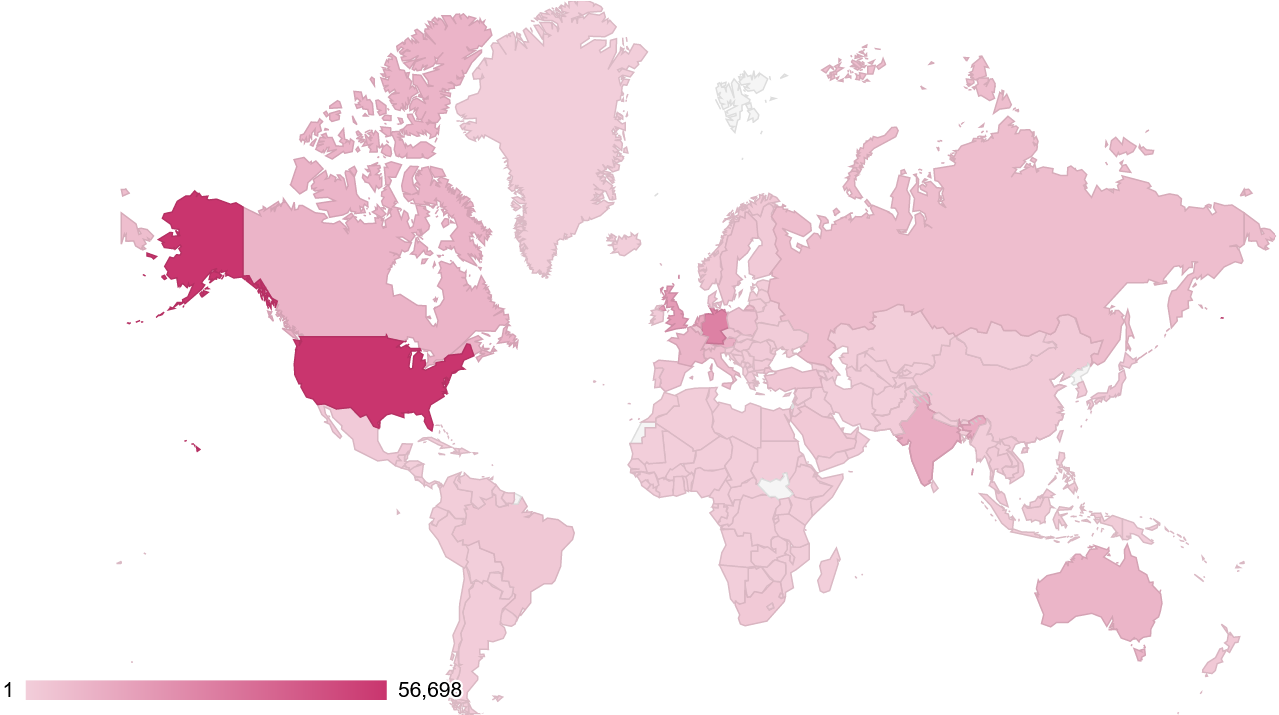
Top Visitor Countries

Country
United States of America
Germany
United Kingdom
The Netherlands
India

Managed AutoResponder Notifications


A long overdue blog on a solution which was created per request of an Exchange fellow. The original scenario is an organization spinning off, thereby changing their primary e-mail domain. They wanted to inform relations and partners using the old e-mail addresses of this change. However, this solution might also be helpful to organizations after merger and acquisitions or rebranding.

For the sake of the example, let us suppose Fabrikam was acquired by Contoso. Targeted mailboxes are migrated from the Fabrikam tenant to the Contoso tenant. Fabrikam will contain Mail-Enabled Users forwarding messages to their Contoso mailbox counterparts. The migrated mailboxes now hosted in Contoso will be configured to send notifications to senders which sent mail to the old Fabrikam address.

While organizations can resort to 3rd party tools to set up an Exchange Transport Rule with a generic message, a little script might also do the job, offering a more granular and controlled solution.

Solution
The scripted solution is available on GitHub here. It will configure an Inbox rule on the targeted Exchange mailbox(es), which would be the new/migrated mailbox. The rule will trigger when messages land in the inbox which were sent to a specific e-mail address, i.e. the previous e-mail address. It will send out an automatic response, which can consist of a custom subject, message body with an optional embedded image. The configuration of the response is defined in an customizable external XML file:

<?xml version="1.0" encoding="ISO-8859-1"?>  
<config>
  <rule>Contoso Autoresponder</rule>
  <subject>Please update your email recipient to Contoso</subject>
  <body>Dear Sender,

Thank you for your message. Fabrikam is now a whole Contoso subsidiary, and the fabrikam.com e-mail address will change to contoso.com. Your e-mail was forwarded to my new e-mail address. 

Please update contact information, distribution lists, etc. to update [OldMail] e-mail references with my new [Identity] e-mail address. 
 
[logo] 
The Contoso Corporation is a multinational business with its headquarters in Paris.</body>
  <logo>Contoso.png</logo>
</config>

The elements that can be used in the config are:

  • <rule> defines the name of the Inbox rule to be created. When the script runs, it will update any existing previously created inbox rules of the same name.
  • <subject> defines the subject of the response.
  • <body> defines the message body. You can use the following macros here:
    • [OldMail] will get replaced with the original e-mail address.
    • [Identity] will get replaced with the new e-mail address.
    • [Logo] will get replaced with the embedded image.
  • Optionally, <logo> refers to the file name of the image to embed.

Requirements
To run the script, you need the following:

  • Exchange Server 2013 SP1 or later, or Exchange Online.
  • Exchange Web Services (EWS) Managed API 2.21 or later (how to, NuGet package exchange.webservices.managed.api).
  • When using modern authentication or OAuth2, the MSAL library is required (NuGet package Microsoft.Identity.Client). Also, you need to have registered an App in Azure Active Directory with sufficient permissions (e.g. full_access_as_app). After registering the app, Tenant ID, Application ID and certificate or secret is what you need to use with the script to run successfully.
  • In addition to installing the NuGet packages, you can also store their DLLs in the same folder as the script for portability.

Usage
The syntax to run the script is as follows:

.\Set-AutoResponderNotification.ps1 -Identity <Identity> -TemplateFile <File> [-TenantId <TenantId> -ClientId <ClientId> [-CertificateThumbprint <ThumbPrint>] [-CertificateFile <File> -CertificatePassword <SecureString>] [-Secret <SecureString>]] [-Credentials <PSCredential>] [-Clear] [-Overwrite] [-Impersonation] [-TrustAll]

The available parameters and switches are as follows:

  • Identity specifies one or more e-mail addresses of mailboxes to process. Identity supports the pipeline (see examples).
  • OldMail specifies one or more old e-mail addresses to use when configuring the autoresponder message. When specifying multiple identities,
    the number of OldMail entries need to match the number of identities.
  • Server specifies the Exchange Web Services endpoint, for example outlook.office365.com for Exchange Online. When omitted, Autodiscover will be used.
  • Impersonation to use impersonation when accessing the mailbox. When using modern authentication, impersonation is mandatory.
  • TrustAll to accept all certificates including self-signed certificates.
  • TenantId specifies the ID of the Tenant when using a mailbox hosted in Exchange Online.
  • ClientId to specify the Application ID of the registered application in Azure Active Directory.
  • Credentials to specify the Basic Authentication credentials for on-premises usage or against Exchange Online when modern authentication is not an option.
  • CertificateThumbprint is the thumbprint of the certificate to use for modern authentication. The certificate with the public key needs to stored with the registered application for authentication. The certificate with the private key should be present in the local certificate store.
  • CertificateFile and CertificatePassword can be used to specify a certificate file to use. The file should contain the private key; the password protecting the certificate file can be specified using CertificatePassword as a secure string.
  • Secret can be used to specify the secret to authenticate using the registered application. The secret needs to be provided as a secure string.
  • Template
    specifies the XML template file to use when configuring or clearing the autoresponder inbox rule. The format has explained above.
  • Clear specifies if any you want to remove the inbox rules with name specified in the template. Use this when you want to remove autoresponder rules from mailboxes. When using Clear, you don’t need to specify OldMail.
  • Overwrite specifies if any existing inbox rules with name specified in the template should be overwritten. When omitted, the script will skip processing
    mailboxes with inbox rules with conflicting names. Use this when you want to configure the autoresponder only on mailboxes which do not have the rule.

Note that usage of the Verbose, Confirm and WhatIf parameters are supported.

Examples
Nothing more explanatory than an example. When we want to configure the autoresponder on a single mailbox, we can use something like:

image

Here, the autoresponder will get configured on the specified mailbox, triggering when mail has been sent to michel@fabrikam.com using the configuration defined in template.xml. Modern authentication will be used for authentication, using variables for Tenant, Client and in this case secret.

When you want to configure autoresponder for multiple mailboxes, you can for example use a CSV file. It needs to contain two elements which will be passed through pipeline, Identity and OldMail:

Identity,OldMail
philip@contoso.com,p.mortimer@fabrikam.com
francis@contoso.com,f.blake@fabrikam.com

After defining the response in a file template.xml, we can use this CSV to configure inbox rules on the Contoso mailboxes identified by Identity, triggering when mail is sent to their OldMail addresses:

Import-CSV -Path Users.csv | .\Set-AutoResponderNotification.ps1 -Server outlook.office365.com -Impersonation -TemplateFile .\Template.xml -TenantId <TenantId> -ClientId <ClientId> -Overwrite -CertificateThumbprint <Thumbprint>

What will happen is that for every set of Identity and OldMail, the mailbox specified by Identity will be configured with an inbox rule. When an existing rule is found, which is determined using the <rule> element in the XML template, it will get overwritten. The specified certificate will be picked from the local certificate store to authenticate against Tenant with TenantId, as application specified by ClientId.

Note that when the user opens Manage Rules & Alerts in Outlook, the configured inbox rule will be visible. This allows the user to remove it when it is no longer required. After a certain period, administrators can centrally remove these rules as well running the script using the Clear switch.

image

And finally, an example of how this may looks to senders when they receive an autoresponse message, using the sample configuration from the beginning of this article.

image

Application Access Policy
When using the script with modern authentication, you can leverage features such as conditional access to set boundaries for script usage. Also, you can configure application access policies to scope the registered app (script) to a subset of mailboxes. To accomplish this, assign an ApplicationAccessPolicy to the app.

To be more convenient in managing permissions, you can define a distribution group and assign the Application Access Policy with group scope (PolicyScopeGroupId). You then only need to add/remove members as you need to configure mailboxes.

More information about Application Access Policies here. Note that the permissions mentioned to not include full_access_as_app as permission, but it works.

EWS, why not Graph?
Microsoft already announced back in 2018 that development on Exchange Web Services will halt in and focus will shift to Graph. As part of this move, a more recent statement announced deprecation of some least-used API per March 2022, stimulating organizations to switch to using Graph. However, the organization looking for a solution wished for an automatic response with HTML as well as an embedded logo. Because of this, I had to use a template as a reply action.

But where Exchange Web Services supports reply with a template, Graph does not offer this functionality. So, until there is more feature parity between Exchange Web Services and Graph, or EWS goes completely out of service, solutions may still be forced to have a look at EWS for certain tasks.